|
What is
Traditional Chinese Medicine (TCM) ?
How does
Acupuncture work?
What do the scientific communities think?
Is
Acupuncture comfortable?
Are the
needles sanitary?
|
How many
treatments are needed for an effect?
Are there any
side effects?
What is Moxibustion?
What is
Tai Chi?
How does Chinese herbal
therapy work? |
 What is Traditional Chinese Medicine (TCM) ? What is Traditional Chinese Medicine (TCM) ?
Traditional Chinese Medicine
includes acupuncture, moxibustion, cupping, Chinese herbs and nutrition,
Tuina massage therapy, and Tai-chi movement therapy. It is based on
the ancient Taoist philosophy of yin and yang which categorizes
everything into these two properties, each influencing and balancing
the other. With more than 5000 years of clinical history in China, TCM
has now gained increasing acceptance in the United States as more and more
Americans and people throughout the world find relief through TCM. Two
fundamental concepts in TCM are that a person’s mind and body
are one with nature, and treatment focuses on discovering
the true cause of illnesses and healing the root of
conditions.
 |
|
 How does Acupuncture work? How does Acupuncture work?
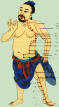
The ancient Chinese discovered
that there is a universal life energy called Qi
that is present in all living things. Qi flows throughout the
human body in specific pathways called meridians. Illnesses and pain
occur when this flow of energy is blocked. Acupuncture works by
dispersing or attracting Qi energy along specific points on the
meridians in order to restore balance between the yin and yang. |
|
 What do the
Scientific Communities think? What do the
Scientific Communities think?
National Institutes of Health in November 1997, convened
a panel of 12 distinguished physicians and scientists to review current reseraches on the effectiveness of
Acupuncture. As a result, NIH formally endorsed acupuncture, stating "There is sufficient evidence of
acupuncture's value to expand its use into conventional medicine and to encourage further studies of its
physiology and clinical value."
The panel determined that acupuncture can relieve post-operative pain and nausea associated with pregnancy
or chemotherapy. It appears to be effective in relieving common disorders such as menstrual cramps, muscle
pain, carpal tunnel syndrome, addiction, and asthma. Stroke, headache, and chronic low back pain were listed.
They also recognized that acupuncture treatment can result in a reduction in the amount of pain medication or
anesthesia.
|
|
 Are the
needles clean? Are the
needles clean?
Only
sterile, disposable needles are used in our facility which
eliminates any possibility of contamination and disease transmission.
|
|
 Is Acupuncture comfortable?
Acupuncture needles are 10
times thinner than hypodermic needles. One can barely feel it when inserted.
Most patients experience relaxation and symptomatic relief. Some
patients even fall into a restful nap.
|
|
Are there any
side effects?
Acupuncture and Chinese herbs, when used properly, usually do not have any
serious side effects. Most people feel a sense of pleasant relaxation and
some may even feel exhilaration. however, some patients may feel slightly
lightheaded and a little soreness after a treatment. We do not advise a
patient to undergo treatment on an empty stomach or right
after strenuous exercise. |
|
What is Moxibustion?
Moxibustion is a procedure of burning a herb, Folium Artemisiae Vulgaris,
commonly known as mugwort, to create heat and therapeutic result on the
affected areas. After moxibustion, deep warmth is usually felt in the applied
area. Moxibustion increases circulation throughout the administered area
and promotes Qi to flow in the channels and meridians. It is used to treat certain types of pelvic pain,
severe cramps, infertility, high blood pressure, and menstrual bleeding.
|
|
 What is
Tai Chi? What is
Tai Chi?
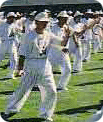
Tai Chi
is a breathing exercise that has been practiced in China for
centuries to strengthen the flow of Qi (energy) within the body.
It is practiced following the form and movement of
martial art while the whole body moves as one very slowly and gently in circular paths.
Tai Chi can enhance and promote balance, coordination, strength, stamina, and flexibility in all the joints and
major muscle groups. Qi stagnation is the cause of Yin and Yang
imbalance that leads to disease and aging. Stemming from this Taoists
belief,
Tai Chi was developed to help circulate the Qi (energy) that releases and
prevents stagnation. Feeling each movement, the practitioner
learns to cultivate the communication between mind and body and to guide the
flow of Qi through the entire body. |
|
How many
treatments are needed for an effect?
Everyone’s
body is unique. The result depends on individual’s commitment and attitude
towards the treatments, as well as duration, nature and severity of the
condition. For the body to recover naturally from chronic illnesses,
confidence and patience are essential.
|
|
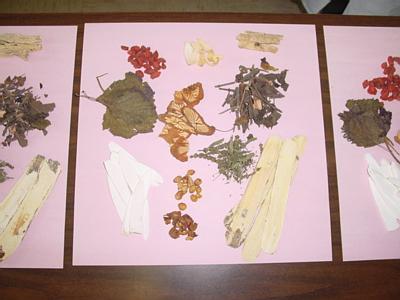 How does Chinese herbal
therapy work? How does Chinese herbal
therapy work?
After diagnosing an individual
patient’s pattern of disharmony, a personalized formula of herbs is
prescribed based on age, constitution, environment, time, and medical
condition. While acupuncture moves and balances the Qi, Chinese herbs
nourish , replenish, and enhance the Qi, blood, and essence of our body.
Especially in chronic ailments, the herbs provide the means for
improved body defense against pathogens and supplies the nutrients for
regeneration. Some herbs, when taken regularly, can even prolong our
lives and rejuvenate our bodies.
|